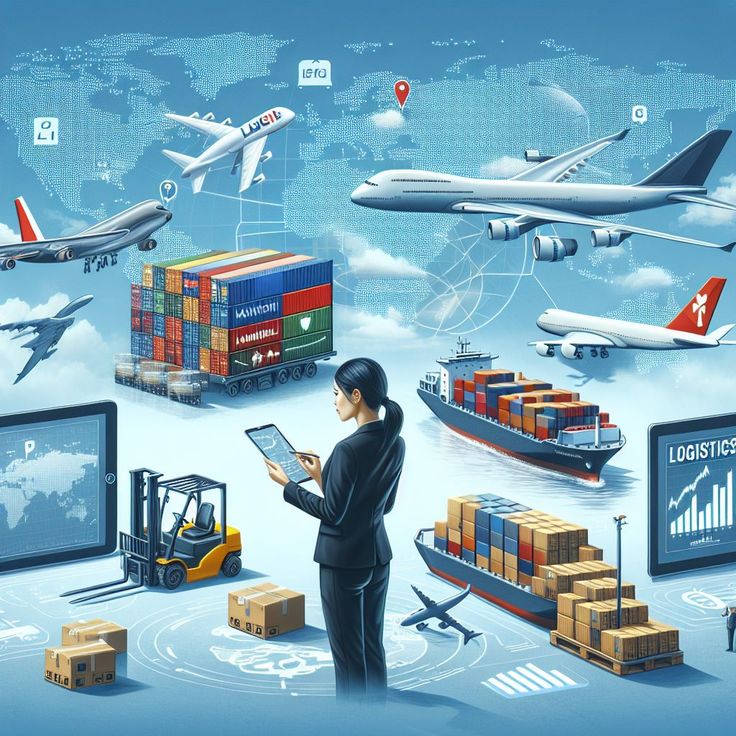
The Role of Transportation and Logistics in the Global Supply Chain
Logistics and transportation are the backbone of global goods movement. Without an efficient transportation system, no business can reliably secure raw materials, manufacture products, distribute them, or achieve sales. This article provides a comprehensive look at the vital role of transportation in the global supply chain.
The Concept of Logistics and Its Place in the Supply Chain
Logistics encompasses all activities from sourcing raw materials to delivering products to the final customer. These activities include transportation, warehousing, inventory management, packaging, cargo tracking, insurance, and customs operations. Any weakness in one of these areas can disrupt the entire supply chain system.
Today’s global supply chains rely on speed, transparency, cost reduction, and high accuracy. Companies that leverage strong logistics enjoy faster operations, lower costs, and higher customer satisfaction.
Why Logistics Plays a Vital Role in International Trade
With globalization expanding, countries are increasingly dependent on imports and exports. Logistics lies at the heart of international trade, and without it, the flow of goods, raw materials, and equipment is disrupted.
- Faster Market Access: Efficient transportation reduces delivery times.
- Reduced Operational Costs: Choosing the right route and transportation method directly affects profitability.
- Competitive Advantage: Brands with strong logistics provide faster and cheaper services.
- Predictable Flow of Goods: Accurate logistics enables better production and sales planning.
Types of Transportation in the Supply Chain
- Maritime Transportation
Maritime transport handles over 80% of global cargo movement and is the most significant method for transporting goods. It is preferred for its low cost, high capacity, and suitability for bulky goods like grains, steel, cement, and raw materials.
Advantages:
- Very cost-effective compared to air and land transport
- Capable of transporting millions of tons of cargo
- Ideal for large-scale international trade
Disadvantages:
- Long delivery times
- Dependent on weather and port conditions
- Land Transportation
One of the most common methods, especially for domestic and regional distribution. Land transport is highly flexible and suitable for short- and medium-distance routes.
Advantages:
- Reasonable speed
- Direct door-to-door delivery
- Better route control
Disadvantages:
- Fuel costs
- Risk of accidents and road limitations
- Air Transportation
The fastest method globally, mainly used for high-value, sensitive, or perishable goods.
Advantages:
- Fastest delivery speed
- Minimal risk of damage
Disadvantages:
- Most expensive transportation method
- Weight and volume limitations
- Rail Transportation
Rail is one of the safest and most sustainable transport methods, ideal for heavy loads such as containers, minerals, and bulk goods.
The Role of Transportation in Supply Chain Optimization
- Cost Reduction: Selecting the right transport method can reduce up to 40% of supply chain costs. Proper route planning, multimodal transport, and return load management are key techniques.
- Improved Delivery Times: Faster transportation directly impacts customer satisfaction, giving companies a larger market share.
- Risk Reduction and Security: Insurance, standard packaging, GPS tracking, and appropriate handling reduce damage and theft risks.
Innovative Technologies in Transportation and Logistics
- Automation and Robotics: Modern warehouses use intelligent robots to multiply order processing speed.
- AI in Route Management: Artificial intelligence analyzes data to predict optimal routes, scheduling, and costs.
- Live Cargo Tracking: GPS and IoT provide real-time visibility of goods’ locations.
- Green Logistics: Reducing fuel consumption, using clean energy, and smart transportation help minimize environmental impact.
Challenges in Global Supply Chain Transportation and Logistics
- Fuel price fluctuations
- Border, customs, and political restrictions
- Lack of infrastructure in some countries
- Goods damage during long routes
- Shortage of skilled logistics personnel
The Importance of Professional Transport Companies
To avoid financial losses and delays, working with specialized transport companies is essential. Key factors in choosing the right logistics provider include experience, equipped fleets, comprehensive insurance, and international connections.
Conclusion
Transportation and logistics are the most critical factors for a successful global supply chain. From sourcing raw materials to delivering the final product, a strong logistics system reduces costs, speeds up operations, and creates a competitive advantage. With the advancement of new technologies, the future of this industry looks smarter and brighter.